
Google Reviews
Insurance Accepted
Treatment Plans

Maybe your legs feel tired or heavy when you walk. Your feet may feel unusually cold, you may notice numbness or tingling, or perhaps you simply have concerns about your blood pressure or cardiovascular health.
These symptoms don’t always mean something is wrong, but they can be a reason to take a closer look. At Allhealth Medical, our Vascular & Health Assessment gives your provider objective information about your circulation and arterial health to help determine whether additional evaluation or care may be appropriate.
A vascular assessment evaluates blood flow and arterial health using measurements such as the Ankle-Brachial Index (ABI), Toe-Brachial Index (TBI), Pulse Wave Velocity (PWV), and Pulse Volume Recording (PVR). These measurements are obtained using blood pressure cuffs and sensors placed on the arms, ankles, fingers, and toes to provide valuable information about vascular health.
The assessment is non-invasive and designed to provide useful information about circulation and arterial stiffness while supporting your healthcare provider’s overall clinical evaluation.
Depending on your individual needs, vascular testing may provide information related to:
Assess blood flow and identify potential concerns affecting circulation in the arms and legs.
Evaluate arterial stiffness, flexibility, and overall vascular function.
Identify measurements and factors that may indicate increased vascular or cardiovascular risk.
Assess vascular changes associated with high blood pressure and potential peripheral vessel abnormalities.
Your healthcare provider may recommend vascular testing if you have risk factors or concerns related to circulation or cardiovascular health, including:
Diabetes can affect blood vessels and circulation over time. Vascular assessment may help evaluate blood flow and identify potential vascular concerns.
Long-term high blood pressure can place stress on blood vessels. Assessment may provide additional information about arterial health and vascular function.
Smoking can affect blood vessels and increase the risk of circulation problems. Vascular testing can help evaluate peripheral blood flow and arterial health.
Elevated cholesterol can contribute to plaque buildup in the arteries. Vascular assessment may provide useful information about circulation and cardiovascular health.
Vascular changes can become more common with age. Assessment may help evaluate arterial function and identify potential circulation concerns.
Pain, cramping, or discomfort in the legs during physical activity may be associated with reduced circulation. Vascular testing can help assess blood flow.
Symptoms such as cold feet, numbness, or changes in skin color may indicate circulation concerns. Assessment can provide objective information about peripheral blood flow.
People with multiple cardiovascular risk factors may benefit from additional information about their vascular health and arterial function.
The Ankle-Brachial Index (ABI) compares blood pressure in the ankle and arm to assess circulation and identify potential signs of peripheral artery disease.
Pulse Wave Velocity (PWV) evaluates arterial stiffness, which can provide additional information about vascular and cardiovascular health. These measurements can help your provider identify circulation concerns and determine whether further evaluation may be appropriate.
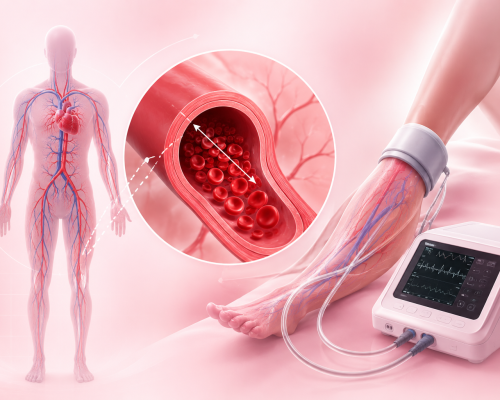

The vascular assessment is non-invasive and convenient. Blood-pressure cuffs and small sensors may be placed on your arms, ankles, fingers, or toes to measure blood flow and arterial function.
The system collects objective vascular measurements that your healthcare provider can review alongside your medical history, symptoms, and other clinical findings.
At Allhealth Medical in Atlanta, our approach combines modern diagnostic technology with personalized, patient-centered care. Vascular and health assessments can provide additional objective information to complement your medical history, physical examination, and other clinical findings.
Our goal is to help you and your healthcare provider better understand your health and make informed decisions about appropriate evaluation and care.
Google Reviews
Insurance Accepted
Treatment Plans
